
Modern E-Commerce MVP with Supabase
How to Build a Scalable E-Commerce MVP with Supabase: Complete Architecture Guide (2026)
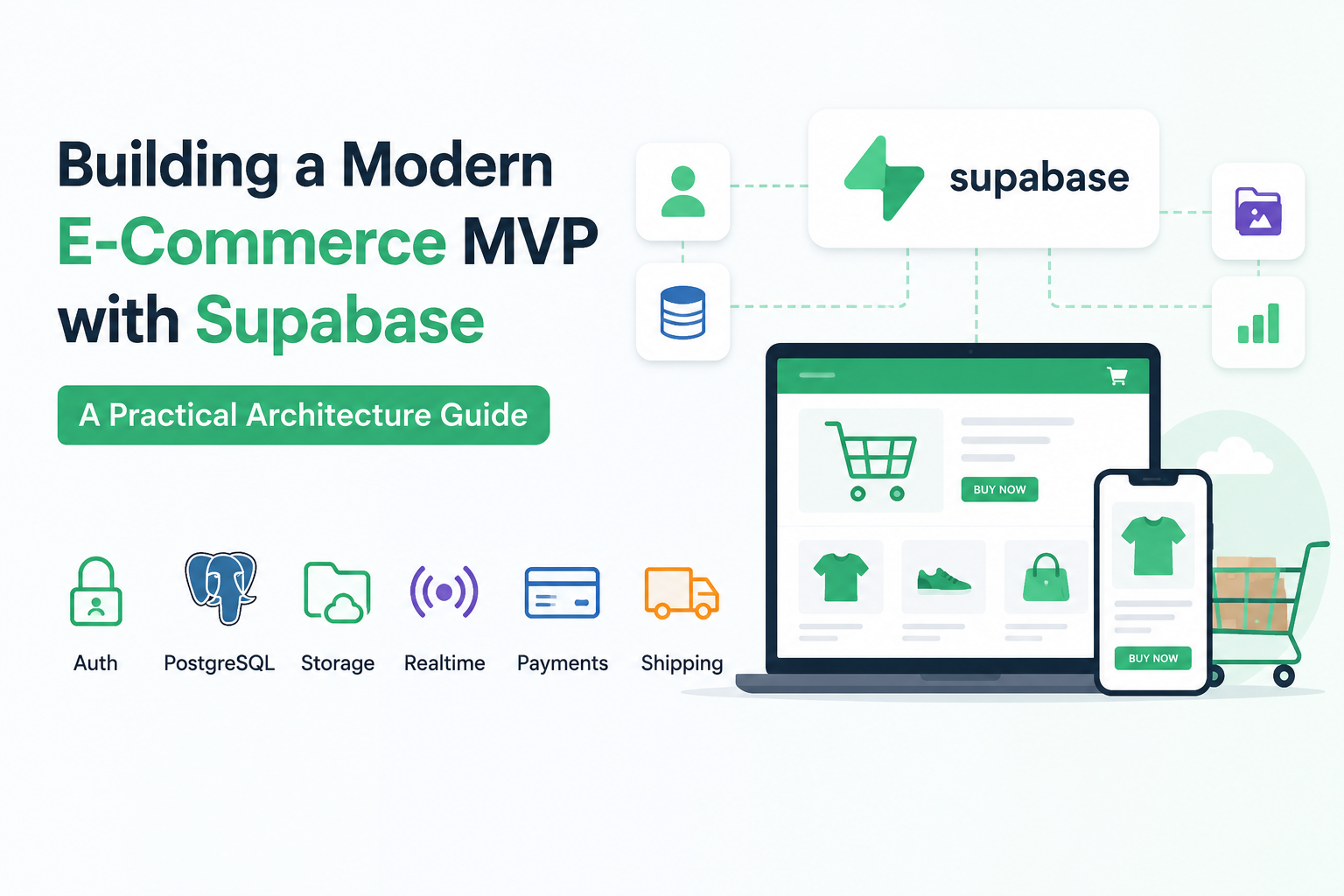
While building a modern ecommerce application, I came across the concept of Backend-as-a-Service (BaaS) — and honestly, it changed how I think about backend development.
The idea is straightforward. Instead of spending weeks setting up infrastructure, you get authentication, database, file storage, APIs, realtime updates, and security layers out of the box. Less boilerplate, more product.
Think about everything that traditionally eats up a developer's time before writing a single line of business logic:
Setting up auth and session handling.
Designing and hosting a database.
Building CRUD APIs from scratch.
Managing file and image storage.
Wiring up realtime infrastructure.
Configuring access control and security.
Building password reset and email verification flows.
And then on top of all that — server provisioning, scaling, monitoring, and DevOps.
BaaS takes most of that off your plate.
After evaluating a few options, I went with Supabase — and it was the right call for where I was in the build.
PostgreSQL database, authentication, storage, REST APIs, realtime subscriptions, and Edge Functions — all ready to go. That freed me up to focus on the things that actually matter for the product: inventory, orders, payments, and the overall customer experience.
For anyone building an MVP or an early-stage product, speed and simplicity are everything.
Supabase hits that balance well — simple enough to move fast, but scalable enough that you're not painting yourself into a corner as you grow.
If you're evaluating your backend stack, it's worth a serious look.

Promote this post
Share & amplify
LinkedIn post generator
Generate a polished, professional LinkedIn post from this article. Edit before posting.
Comments (0)